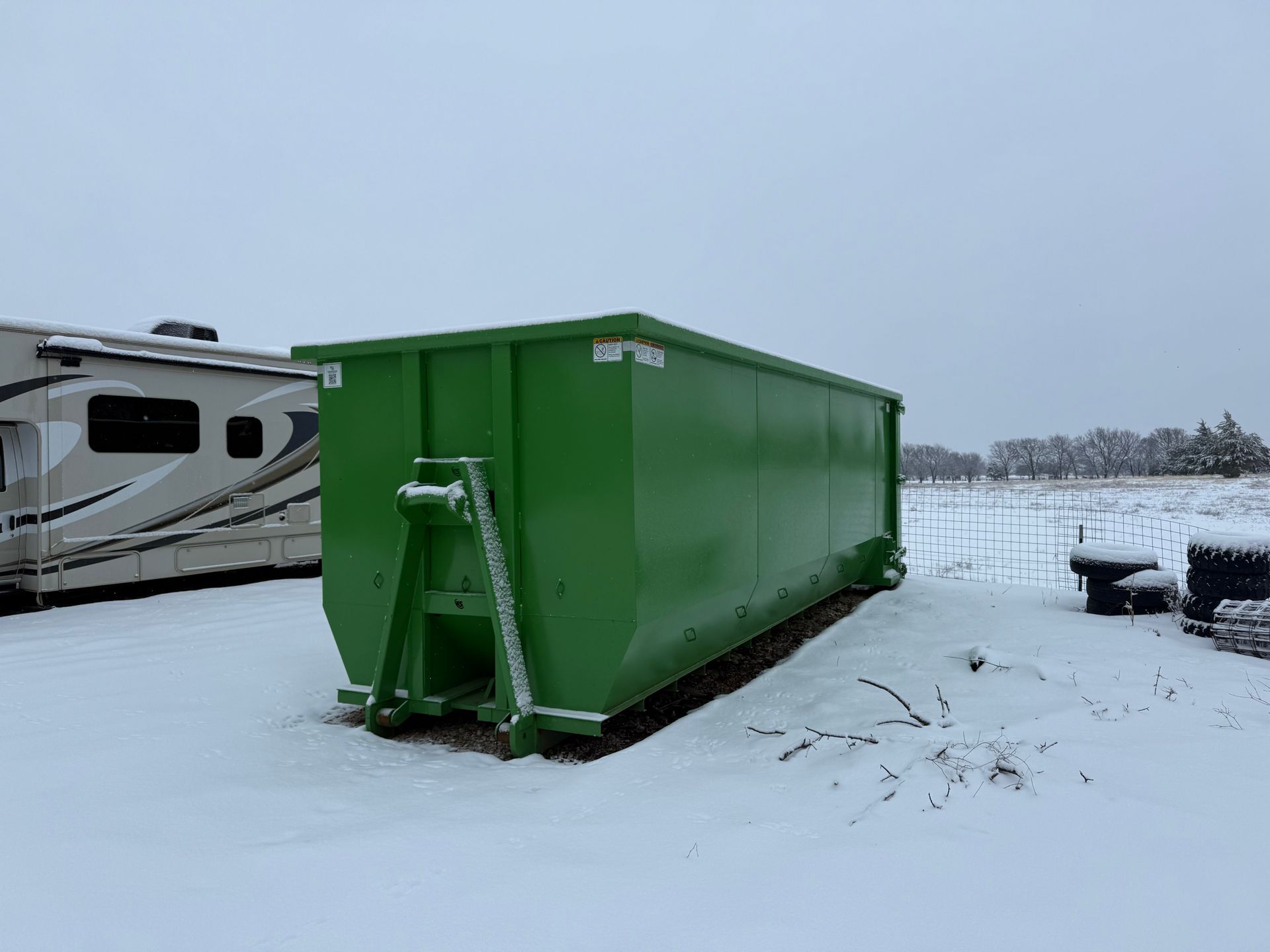
What Can and Cannot Go in a Rental Dumpster in North Texas
assumption often leads to costly surprises at pickup: prohibited items trigger removal fees, delay the haul, or result in the load being rejected entirely. Knowing what is and is not accepted before the container is delivered prevents all of that.
This guide covers what can go in a rental dumpster across Rhino Solutions' service area, including Decatur, Denton, Bowie, and Fort Worth. It also covers the materials that cannot go in, why those restrictions exist, and what to do instead when a prohibited item comes up during a cleanout or renovation.
Knowing the rules ahead of time is the single easiest way to keep a project on schedule and avoid fees that have nothing to do with the actual work being done.
Why Dumpster Rental Restrictions Exist in North Texas
Dumpster rental restrictions are not arbitrary. They exist because municipal landfills in Texas are subject to state and federal environmental regulations that prohibit the disposal of certain materials in standard waste streams. The Texas Commission on Environmental Quality (TCEQ) oversees hazardous waste handling statewide, and violations carry significant penalties for both providers and their clients.
For dumpster rental companies, accepting prohibited materials creates liability that extends beyond the container. If a haul arrives at the landfill with hazardous items mixed into general debris, the provider is responsible for the violation, not just the renter. That liability is why restrictions are enforced at pickup, not just at disposal.
The TCEQ's household hazardous waste guidelines outline which materials require special handling and where Texas residents can dispose of them safely. Understanding those categories before renting a dumpster removes the guesswork entirely.
What You Can Put in a Dumpster in North Texas
The majority of materials from residential cleanouts, home renovations, yard projects, and construction jobs are accepted in a standard roll-off dumpster. The categories below cover what Rhino Solutions accepts across all four service areas.
General Household Waste and Furniture
Most items from a whole-home or partial cleanout are accepted without restriction. This includes furniture in any condition, mattresses, box springs, clothing and textiles, toys, small appliances, general household junk, and bagged trash. Sofas, armchairs, dining sets, bookshelves, and similar large items can go directly into the container.
Large appliances are generally accepted with some conditions. Refrigerators, dishwashers, washing machines, and dryers are typically allowed, but some landfills require that refrigerants be removed from refrigerators and air conditioners before disposal. Confirm this with Rhino Solutions before loading if the appliance still contains refrigerant.
| ✓ Accepted: General Household Items
|
Construction and Renovation Debris
Renovation debris is one of the most common dumpster loads in North Texas, and most of it is accepted in a standard container. Drywall, lumber, plywood, flooring of all types (hardwood, laminate, vinyl, carpet), ceiling tiles, insulation batts, windows, exterior and interior doors, cabinets, and countertops are all accepted.
Weight becomes the key concern with renovation debris. Tile, brick, and concrete are significantly heavier per cubic yard than lumber or drywall, and a container that looks only half full on a tile job can still be near its weight limit. Mixing material types helps distribute weight more evenly. For large volumes of concrete or masonry, ask about dedicated heavy-debris containers.
• Drywall and plaster
• Lumber, framing materials, and plywood
• Flooring: hardwood, laminate, vinyl plank, carpet, and tile
• Insulation (non-asbestos)
• Windows and exterior/interior doors
• Cabinets, countertops, and vanities
• Roofing shingles (within weight limits)
Yard and Landscaping Waste
Seasonal cleanups, landscaping overhauls, and yard clearing projects generate significant debris volume. Branches, brush, tree stumps, shrubs, grass clippings, mulch, sod, and bagged yard waste are all accepted. This applies whether the project is a routine spring cleanup in Fort Worth's Near Southside neighborhood or a full yard renovation after a winter storm in Decatur.
Dirt and soil are accepted with weight limit caveats. Dirt is heavy, and large volumes can push a standard container over its weight allowance quickly. For projects involving excavation or grading, discuss volume estimates with Rhino Solutions before booking to confirm the right container size and weight allowance.
What You Cannot Put in a Dumpster in North Texas
The following categories are prohibited from all standard roll-off dumpsters in Texas. Placing prohibited items in a container can result in additional removal fees, load rejection, or both. If any of these materials are part of a cleanout or renovation, arrange for separate disposal before the dumpster arrives.
| ✗ Prohibited Items — Do Not Load The materials listed in the sections below cannot go in any standard roll-off dumpster. Mixing prohibited items with general debris does not make them acceptable and will result in fees at pickup. |
Hazardous Materials
Hazardous materials are the most strictly regulated category under Texas law. Paint (latex and oil-based), paint thinner, solvents, motor oil, gasoline, diesel, pesticides and herbicides, cleaning chemicals, pool chemicals, propane tanks, and any material containing asbestos are all prohibited from standard dumpster disposal.
Asbestos-containing materials require licensed abatement and cannot be mixed with any general debris. This is particularly relevant in North Texas for older homes, as building materials installed before the mid-1980s frequently contain asbestos. The EPA's hazardous waste basics guide provides a comprehensive breakdown of what qualifies as hazardous under federal classification.
• Paint (latex and oil-based), stains, and varnishes
• Motor oil, gasoline, diesel, and other automotive fluids
• Pesticides, herbicides, and fertilizers with chemical content
• Propane tanks (full or empty)
• Pool chemicals and cleaning solvents
• Asbestos-containing materials (requires licensed abatement)
Electronics and Batteries
Texas prohibits the disposal of most electronics in standard landfills. Televisions, computer monitors, desktop computers, laptops, printers, and other consumer electronics fall under e-waste regulations and require recycling through designated channels. Lithium-ion batteries, found in phones, laptops, power tools, and e-bikes, are a fire hazard in dumpsters and are strictly prohibited.
Lead-acid batteries from vehicles are also prohibited. For proper e-waste and battery recycling options in North Texas, Earth911's recycling locator allows searches by material type and zip code to find the nearest drop-off facility.
Tires and Automotive Fluids
Tires cannot go in roll-off dumpsters regardless of quantity. Texas has a dedicated tire recycling program, and most tire retailers accept old tires when new ones are purchased. Automotive fluids including antifreeze, brake fluid, transmission fluid, power steering fluid, and windshield washer concentrate are also prohibited from landfill disposal and cannot be loaded into a container.
Medical and Biohazardous Waste
Syringes, needles, lancets, medical tubing, bandages with blood or bodily fluids, expired medications, and any material classified as biohazardous waste cannot be placed in a standard roll-off dumpster.
These materials require disposal through licensed medical waste handlers. Estate cleanouts involving a home health care setting may encounter these items, and they should be separated and handled before the dumpster is loaded.
What to Do with Prohibited Items Instead
Every prohibited item has an appropriate disposal channel. Planning for these items in advance prevents the need to set them aside after the dumpster has already been loaded.
• Hazardous household waste: The TCEQ sponsors periodic household hazardous waste collection events across Texas. Fort Worth and Denton both operate permanent or periodic drop-off programs. Check the TCEQ website or the city's solid waste department for current schedules.
• Electronics: Most major retailers (Best Buy, Staples, and others) accept electronics for recycling at no charge. Use the Earth911 locator to find the nearest drop-off option by material type.
• Tires: Tire retailers typically accept used tires as part of a new purchase. Auto parts stores and some county programs offer drop-off options as well.
• Batteries: Auto parts stores accept lead-acid vehicle batteries. Retailers accepting lithium-ion batteries include Best Buy and Home Depot, among others.
• Medications: Many pharmacy chains operate take-back programs for unused or expired medications. The DEA also sponsors national prescription drug take-back events.
Setting aside prohibited items before the dumpster is delivered keeps the container available for all the materials that are accepted and avoids any delays or fees at pickup.
Gray Areas: Items That Depend on the Project
A few material categories sit between clearly accepted and clearly prohibited. How they are handled depends on the specific project, the volume involved, and how they are loaded.
Concrete, Brick, and Heavy Masonry
Concrete, brick, stone, and heavy masonry are accepted, but weight limits apply regardless of container size. A small amount of broken concrete mixed with general renovation debris is usually fine. Large volumes of concrete from a driveway removal or foundation work often push a standard container past its weight limit well before the container appears full. For projects involving significant masonry demolition, ask Rhino Solutions about a dedicated heavy-material container.
Large Appliances with Refrigerants
Refrigerators, freezers, window air conditioners, and dehumidifiers contain refrigerants that must be removed before landfill disposal. Once the refrigerant has been professionally evacuated, these appliances are generally accepted. Appliances without refrigerants (washing machines, dryers, dishwashers, stoves) are accepted without this extra step.
Mixed Loads with Unknowns Buried Inside
Estate cleanouts and whole-home cleanouts occasionally turn up prohibited items buried in boxes or mixed into general debris. A can of old paint in a box of miscellaneous garage items, or a car battery tucked behind a shelf, can contaminate an entire load if not caught before pickup. Walking through the loaded container before calling for pickup to confirm no prohibited items are visible is a worthwhile final check on any large cleanout.

Frequently Asked Questions
Can I put old furniture in a dumpster?
Yes. Furniture in any condition is accepted in Rhino Solutions' roll-off containers. Sofas, chairs, tables, mattresses, desks, dressers, and similar items can be loaded without restriction. For very bulky items, break them down if possible to maximize container space, though it is not required.
What happens if I accidentally include a prohibited item?
If a prohibited item is discovered at the landfill, the load may be flagged and additional removal fees applied. In some cases, a load with significant hazardous contamination can be rejected entirely. The best approach is to confirm any uncertain items with Rhino Solutions before loading. The team can quickly confirm what is and is not accepted for a specific project type.
Are there weight limits I should know about?
Yes. Every container has a weight limit that applies regardless of how full it appears. Standard limits vary by container size, and heavy materials like concrete, tile, and roofing shingles can reach that limit well before the container is visually full. Overage fees apply per ton above the included weight. For projects involving significant heavy material, discuss weight expectations with Rhino Solutions before booking.
Questions Before You Book?
Rhino Solutions Has Answers.
Knowing what goes in the dumpster before it arrives keeps projects on schedule and avoids the fees that come with prohibited items or overweight loads. The breakdown above covers the materials Rhino Solutions accepts across Decatur, Denton, Bowie, and Fort Worth, as well as the prohibited categories and what to do with each one.
For any material that is not clearly covered here, a quick call before booking is all it takes. The team handles these questions daily and can confirm whether a specific item is accepted, suggest the right container size for a mixed load, or point toward the right disposal channel for anything that cannot go in the container.
To rent a dumpster or ask a question before booking, call 940-980-9650. For projects in Decatur, TX and across North Texas, delivery is available on flexible scheduling with transparent pricing and no surprise fees at pickup.